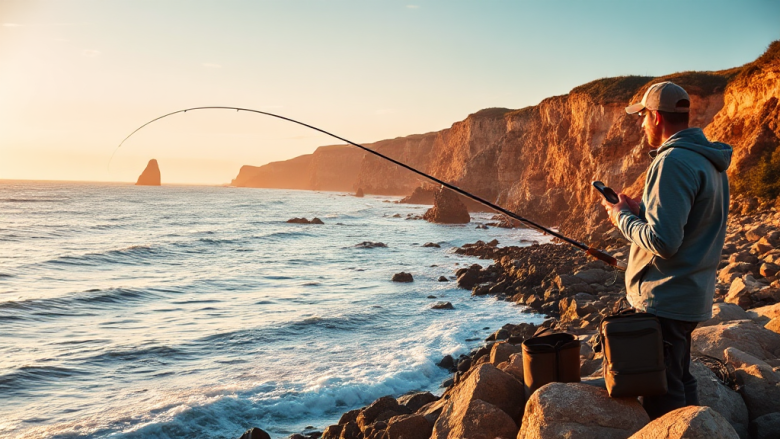
How Do You Get a Fishing License in Portugal as a Visitor?
If you want to fish from the shore or a boat in mainland Portugal, you generally need a recreational sea fishing licence issued through the country’s fisheries authority, DGRM. The good news is that the process is simpler than many visitors expect. You do not need a Portuguese tax number, you do not need to navigate a government portal in a language you may not speak, and you do not need to visit an office in person. A fishing license for mainland Portugal can be arranged online in a few minutes, often before you have even finished packing your tackle.
That is the short answer. The longer answer depends on where you plan to fish, what you plan to catch, and how long you intend to stay. This piece is written the way a consultant would brief a cautious client: requirements first, then the procedure, then the checks that stop small oversights from turning into expensive problems on the water.
What the Licence Actually Covers
Portugal splits fishing into categories, and the one most visitors care about is recreational sea fishing. This covers angling from the coast, from beaches, from rocks and jetties, and from a boat in the sea, using rod and line for personal, non-commercial purposes. It is not a commercial licence, and it does not give you permission to sell your catch.
Freshwater fishing is handled differently. Rivers, reservoirs and inland lakes fall under separate regional rules, and in some cases you deal with local authorities or clubs rather than the national sea fishing framework. If your trip mixes coastal and inland angling, treat them as two separate permissions and confirm each one. Assuming a single document covers everything is one of the most common mistakes.
There are also restrictions that apply regardless of your licence. Minimum size limits, bag limits, closed seasons and protected species rules exist to keep stocks healthy. A licence makes your activity legal; it does not make every fish fair game. Local signage and the DGRM rules are the final word on what you may keep.
Who Needs One and When
The straightforward position is that anyone aged roughly sixteen and above who fishes recreationally in Portuguese sea waters needs a licence. That includes tourists, expatriates and residents. Age thresholds and any concessions for younger anglers or seniors are set by the authority, so confirm the current position if your group includes children or older family members.
Short trips are not exempt. A weekend of shore casting near Lisbon or a single afternoon off the Algarve coast still falls inside the requirement. Some people assume that a few hours of fishing needs no paperwork, or that a charter boat’s own licence covers everyone on board. Neither assumption is safe. On many charter trips the skipper holds a commercial licence for the vessel, but individual anglers are still expected to hold their own recreational permission. Ask the operator directly, and if the answer is vague, sort out your own licence before the trip.
Because Portugal’s coastline is long and varied, this is not a niche concern. portugal fishing draws visitors from across Europe and beyond, and the rules apply equally to a local retiree with a favourite beach and a first-time visitor with a rented rod.
What You Need Before You Start
Here is the part that surprises people. The list of requirements is short.
You need a valid identity document, typically a passport or national ID card. You need basic personal details: name, date of birth, contact information. You need to know the period you want the licence to cover, since these are usually issued for defined durations rather than indefinitely. You need a payment method, and modern application services accept ordinary debit and credit cards as well as mobile wallet options.
What you do not need is just as important. You do not need a Portuguese NIF, the tax identification number that normally complicates life for foreign visitors. You do not need to create an account on a government system and interpret its menus. You do not need to print, sign and post a paper form, and you do not need to find a physical office during limited opening hours. For a visitor with a fixed itinerary, that difference matters a great deal.
One practical point: check the spelling of your name against your passport. If a fisheries officer compares your licence to your ID and the details do not match, the document may be treated as invalid. Small clerical errors are avoidable and annoying to fix from a beach.
How the Application Process Works
The procedure, stripped of jargon, runs in four stages.
First, you provide your details through an online form. A well-designed application takes around three minutes, which is roughly the time it takes to drink a coffee. Second, you choose the licence duration that matches your trip. Third, you pay securely by card, Apple Pay or Google Pay. Fourth, you receive confirmation that your licence has been processed, which you can keep on your phone and show if asked.
That is the whole flow. There is no queue, no appointment and no need to be physically in Portugal when you apply, which means you can arrange everything before departure and start fishing the day you arrive. If your plans shift, you can apply from a hotel room or a café with Wi-Fi.
Using a dedicated application service rather than wrestling with an unfamiliar government interface is the pragmatic choice for most visitors. It removes the language barrier and the guesswork, and it keeps the payment step familiar. If you are comparing options and want the simplest route to fishing in portugal, an online service built specifically for this licence is the sensible starting point.
What to Check Before You Cast
Getting the licence is step one. Confirming it is valid for your exact plans is step two, and this is where careful anglers separate themselves from unlucky ones.
Check the duration. A licence issued for a short window will not cover a longer stay, and renewing mid-trip is an unnecessary distraction. Check the geography. Mainland Portugal is the usual scope; the Atlantic archipelagos of Madeira and the Azores operate under their own arrangements, so do not assume a mainland licence travels with you. Check the activity. Shore angling and boat angling may sit under the same recreational umbrella, but spearfishing and other specialised methods can have their own conditions.
Then check the local rules where you intend to fish. Some beaches and protected coastal areas restrict or prohibit fishing, particularly during nesting seasons or in marine reserves. A licence does not override a local ban. Look for signage, ask at a local tackle shop, or check municipal information before you set up.
Finally, carry your documentation. Keep a digital copy on your phone and, if you are cautious by nature, a printed copy in your bag. Inspections happen, and being able to produce a clear, matching document turns a potentially awkward conversation into a brief one.
The Bottom Line for Visiting Anglers
Portugal rewards anglers. The mainland coast offers rocky headlands, long sandy beaches, estuary mouths and deep-water marks, with species ranging from bass and bream to mackerel and beyond. None of that is worth risking a fine or a ruined morning over a piece of paperwork that takes minutes to arrange.
So treat the licence as part of your trip planning, not an afterthought. Confirm you need one, gather your ID and payment details, apply online, and check the scope against your actual itinerary before you travel. If you are fishing only in mainland sea waters with rod and line for personal use, the path is short and the requirements are light.
Do the small things properly and the rest of the trip takes care of itself. Sort the licence early, keep a copy on your phone, respect local restrictions, and spend your energy on reading the water rather than worrying about whether you are legal. That is the whole strategy, and it works whether you are casting from an Algarve beach for a week or squeezing in one evening on a rocky shore near Lisbon.